


Zero Trust Security for SMBs: A Practical Implementation Guide
Cyber threats have evolved dramatically in recent years, and small and mid-sized businesses Today’s cyberattacks against small and mid-sized organizations are more sophisticated. Cybercriminals target SMBs for ransomware, credential theft, and data breaches because they lack committed security teams and established defenses. Modern company processes use cloud apps, mobile devices, and remote access, providing a complex and ever-changing attack surface.
This is why modern SMB security strategies require Zero Trust security and AI-Powered Cyber Compliance. To decrease risk, Zero Trust verifies every access request, limits rights, and continuously monitors user behavior. Combined with AI-Powered Cyber Compliance, organizations can automate security checks, detect anomalies faster, and maintain regulatory standards more efficiently. This Zero Trust implementation guide helps SMBs build a secure cybersecurity framework without draining internal resources.
What Is Zero Trust Security?
Zero Trust security holds that no user, device, or application should be trusted automatically, even within the corporate network. Instead, identification, device health, permissions, and risk level are verified before access.
Zero Trust secures individual access requests rather than network location. Every system or data interaction needs authentication and authorization.
Zero Trust security for SMBs includes several key practices:
- Continuous authentication and authorization
- Verification of device security posture
- Role-based access controls
- Encryption of sensitive data
- Real-time activity monitoring
- Conditional access policies
This approach creates multiple layers of protection that prevent attackers from moving freely through systems, even if they gain initial access.
Zero Trust security for SMBs is not a single product or technology. Identity management, endpoint security, network controls, and monitoring are integrated into a strategic defense paradigm.
Why Traditional Perimeter Security Fails SMBs
Older perimeter security models were built at a time when business systems were kept on a central office network. Firewalls and intrusion prevention systems kept the network safe from the outside, and it was presumed that people who worked there were honest.
In the past, businesses worked inside a clearly defined area.
1) Cloud-Based Systems Increase Attack Surface
Many SMBs use cloud-based collaboration, accounting, and customer management technologies. These applications are outside the corporate network and accessible to anyone, rendering perimeter protections ineffective.
2) Hybrid and remote work pose new risks
Employees now use multiple devices and networks from multiple places. Home routers, public Wi-Fi, and unmanaged devices pose security vulnerabilities that typical network security cannot address.
3) Credential-Based Attacks Surge
Instead of technological exploits, most current cyberattacks start with stolen credentials. Attackers can log in as normal users using phishing and password reuse.
Perimeter defenses seldom stop attackers with correct credentials.
4) Lateral Movement Allows Big Breaks
Attackers search the network for valuable data and privileged accounts after acquiring access. They can travel across computers and steal data or deploy ransomware without segmentation or access limitations.
Zero Trust enforces identity verification and limits environment access to mitigate these problems.
Key Components of a Zero Trust Architecture for SMBs
Successful Zero Trust security for SMBs takes more than enabling a few security tools. Zero Trust protects identity, devices, networks, apps, and data through coordinated restrictions in SMB cybersecurity. Each component checks access, limits rights, and detects dangers before they cause damage.
Instead of replicating complicated enterprise architectures, small and mid-sized firms should create practical measures that give meaningful security. The right Zero Trust architecture should be scalable, controllable, and business-aligned with business operations.
1) Identity-Centric Security Controls
Identity is the core of any Zero Trust architecture. Instead of trusting users because they are inside a network, Zero Trust evaluates each user’s identity before granting access to applications or data.
For SMBs, identity security provides the strongest return on investment because most cyberattacks begin with stolen credentials.
2) Strong Authentication and Access Verification
First line of defense in Zero Trust is authentication. Every login must be verified with strong authentication methods beyond passwords.
Strong authentication limits unauthorised access and secures company systems even with compromised credentials.
These procedures are essential to current small business security.
3) Endpoint and Device Security Controls
Zero Trust demands continual device validation for business system access. A lawful user on a compromised device is still a security concern.
Only trusted and compliant devices can access crucial resources with endpoint security.
Device trust controls prevent malware-infected devices from entering the company.
4) Network Access Controls and Segmentation
Zero Trust limits how systems communicate with each other rather than allowing unrestricted network access.
Instead of giving users full network connectivity, access is restricted to only the systems required for their role.
Zero Trust network access (ZTNA) allows users to connect directly to approved applications rather than the entire network. This significantly reduces attack exposure compared to traditional VPN solutions.
Segmentation also limits the spread of ransomware and other threats by isolating critical systems.
5) Application-Level Security Controls
Applications represent one of the most common attack targets in SMB environments. Zero Trust requires controlling how users interact with business applications.
These controls ensure that users access only authorized applications and only in approved ways.
Application-level policies are especially important in cloud and SaaS environments where traditional network controls do not apply.
6) Data Protection and Access Controls
Protecting sensitive business data is one of the primary goals of Zero Trust security.
Even if attackers gain access to systems, data protection controls help prevent data loss or exposure.
Data-centric controls ensure that security remains effective even when other defenses fail.
7) Continuous Monitoring and Security Visibility
Zero Trust requires ongoing monitoring of user activity, devices, and network traffic. Continuous visibility allows organizations to detect suspicious behavior before it becomes a major incident.
Security monitoring platforms aggregate this information and generate alerts when abnormal behavior occurs.
Continuous monitoring is essential for maintaining a resilient SMB cybersecurity framework.
Also Read: How AI-Powered Threat Detection is Transforming Cybersecurity in 2026
Identity and Access Management (IAM) as the Foundation
Zero Trust security relies on Identity and Access Management. IAM systems control organization-wide access since Zero Trust verifies users and authorization.
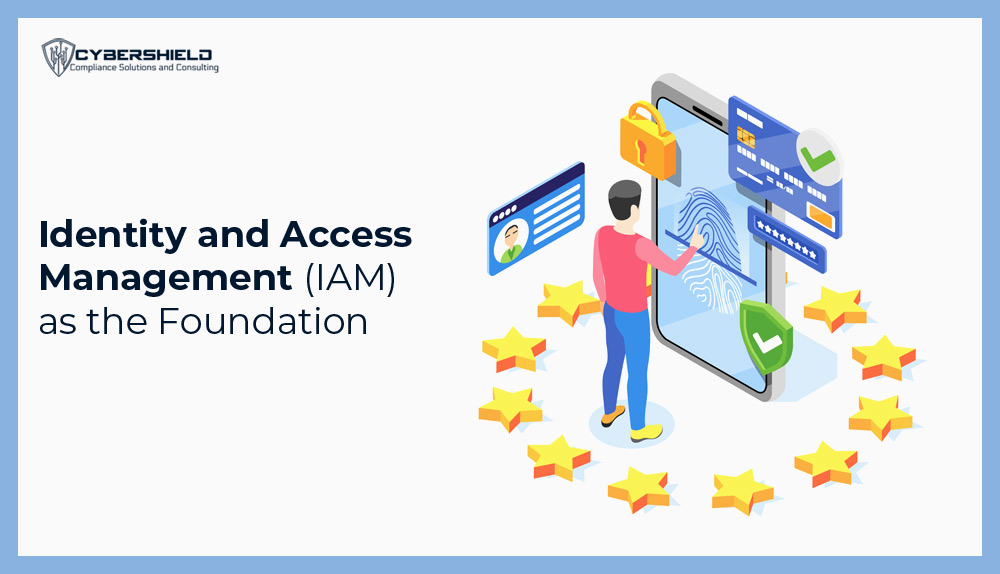
Strong IAM implementation automates account provisioning and deprovisioning as employees join or leave. It protects former employees and unused accounts from becoming security threats.
Role-based access control streamlines permission management by assigning access by job function rather than user.
Privileged access management matters too. Administrative accounts have broad system access and need stricter monitoring and controls.
Without a mature IAM system, Zero Trust cannot be implemented effectively.
Multi-Factor Authentication (MFA) and Strong Authentication Controls
Passwords alone are weak authentication. Phishing, malware, and password reuse lead to many breaches.
Multi-Factor Authentication verifies more than passwords. User authentication requires a second factor like:
- Authentication applications
- Hardware tokens
- Biometrics
- Security keys
- Push notifications
Adaptive authentication systems can dynamically increase security requirements based on risk levels.
For SMBs, MFA is one of the most effective and affordable Zero Trust controls available.
Implementing Least Privilege Access Across Users and Systems
Least privilege access requires a structured approach to permission management.
Organizations should begin by identifying all users, systems, and applications and mapping required access levels.
Best practices include:
- Removing unnecessary administrator accounts
- Creating separate admin and user accounts
- Restricting file share access
- Limiting database permissions
- Implementing approval workflows
Just-in-time access allows administrators to receive elevated privileges only when required.
Regular access reviews ensure permissions remain appropriate over time.
Least privilege is essential for reducing both insider risks and external threats.
Final Thoughts
Zero Trust is no longer a security model reserved for large enterprises. As cyber threats become more sophisticated and small businesses increasingly rely on cloud platforms, remote work, and interconnected systems, adopting Zero Trust security for SMBs has become a practical necessity rather than a future goal. The traditional approach of trusting users inside the network simply does not provide adequate protection in today’s threat landscape.
At CyberShield CSC, organizations gain the advantage of a dedicated security team that manages implementation, monitoring, and long-term optimization. With expert guidance and integrated solutions, businesses can build a sustainable small business security strategy that protects critical assets while supporting growth.
Also Read AI-Powered Cyber Compliance Monitoring: Stay Audit-Ready Always