

From Risk Assessment to Resilience: Building a Modern Cyber Defense Strategy
Introduction
There’s a quiet rebrand happening in cybersecurity, and it’s overdue.
For 20 years, the industry has sold prevention. Buy this firewall, this antivirus, this endpoint platform, and bad things won’t happen. The data says otherwise. Verizon’s 2024 DBIR tracked over 30,000 incidents and concluded what every CISO already knew: prevention alone fails. Sophisticated attackers always find a way in, and even unsophisticated ones often do.
That’s why the conversation is shifting from defense to resilience. A modern cyber defense strategy isn’t measured by how many attacks were blocked. It’s measured by how fast the business recovers when one succeeds, how contained the damage was, and whether anyone outside IT even noticed.
This guide walks the journey from cyber risk assessment strategy through cyber resilience framework design, covering everything between. If you’re rebuilding your program for 2026, treat this as your map.
Why Modern Cyber Defense Requires More Than Basic Security Controls
Antivirus, a firewall, and an annual security awareness video used to be “reasonable.” Today they’re table stakes that wouldn’t slow down a moderately motivated attacker.
A modern cyber defense strategy assumes breach. Identity is the new perimeter, the network is everywhere, the supply chain is in scope, and the attacker is using AI to scale phishing and exploit development. Static controls aren’t enough. You need adaptive controls that learn, telemetry that’s actually monitored, and a recovery capability that’s been tested under fire.
That’s the difference between security and resilience. Security tries to stop the punch. Resilience accepts you’ll get hit, and trains you to stay standing.
Understanding Cyber Risk Assessment in 2026
Risk assessment is where every cybersecurity risk management program either takes off or stalls. It’s the work that connects technical reality to business priorities.
In 2026, a credible cyber risk assessment strategy looks at four things. Assets (what do we have, where does it live, who touches it). Threats (who would want to harm us, and how). Vulnerabilities (what weaknesses exist in our environment). And impact (what happens to the business if any given threat exploits any given weakness).
Done well, this produces a prioritized list of risks expressed in business terms, not vendor terms. “$4.2M revenue exposure if our customer database is exfiltrated” beats “CVE-2024-12345 found on web server” every time. The first one gets executive attention. The second one gets ignored.
Identifying Critical Assets and Threat Vectors
You can’t protect what you can’t see. Asset inventory is the unsexy bedrock of resilience.
Start with the data, not the systems. What are the crown jewels? Customer PII, financial records, source code, M&A documents, ePHI, payment data. From there, map the systems that store, process, or transmit that data. Then map the identities and accounts with access to those systems.
Once you have the asset map, overlay threat vectors. Which assets are reachable from the internet? Which are exposed to third-party vendors? Which require privileged access? Which depend on legacy software vendors no longer issuing patches? The intersection of “high value” and “high exposure” is where you spend first.
Vulnerability Assessments vs Risk Assessments
These two get confused constantly, and the confusion costs money.
A vulnerability assessment identifies known weaknesses in systems and software. It’s largely automated. The output is a list of CVEs, misconfigurations, and missing patches.
A risk assessment evaluates whether those weaknesses matter to the business and how much. It factors in threat likelihood, asset value, existing controls, and potential impact.
A vulnerability assessment tells you a server has a critical flaw. A risk assessment tells you whether that server hosts patient records, faces the internet, and would cost the company $9M in regulatory exposure if exploited. You need both. They’re not interchangeable.
Threat Modeling and Attack Surface Analysis
Threat modeling is risk thinking applied at design time. The simplest framework is STRIDE (Spoofing, Tampering, Repudiation, Information disclosure, Denial of service, Elevation of privilege). For each system or feature, walk the threats and ask: how could this be abused?
Attack surface analysis is the operational counterpart. It maps every internet-facing asset, every exposed API, every cloud bucket, every domain, every subsidiary’s infrastructure. The point is to see your environment the way an attacker does. Continuous attack surface management tools have made this much easier than it was even three years ago, and the cost-to-value ratio is excellent.
Read more blog : How AI-Powered Threat Detection is Transforming Cybersecurity in 2026
Building a Risk-Based Security Framework
Pick one. NIST CSF 2.0 is the most popular in the U.S. ISO 27001 is the international heavyweight. CIS Controls are the most prescriptive and best for organizations that want a checklist. HITRUST is common in healthcare. SOC 2 is more of an audit standard than a framework, but it works as a starting structure.
Whichever you choose, use it as scaffolding for a risk-based program: prioritize controls based on the risks identified in your assessment, not based on what your last vendor sold you. A risk-based cyber resilience framework lets you defend the dollars you’ve spent and identify the gaps that matter.
Implementing Layered Defense (Defense-in-Depth)
No single control stops every attack. Defense-in-depth assumes any layer can fail and stacks them so the next layer catches what the last one missed.
A practical defense-in-depth stack for a mid-market business looks something like this: identity (MFA, conditional access, identity governance), endpoint (EDR/XDR with managed response), network (segmentation, secure DNS, egress filtering), application (WAF, secure SDLC), data (encryption, DLP, backup), and operations (logging, SIEM, 24×7 monitoring). The art is making the layers reinforce each other rather than each adding noise.
Zero Trust as a Foundation for Resilience
Zero Trust isn’t a product. It’s a design principle: never trust, always verify. Every request is authenticated, authorized, and continuously validated regardless of where it originates.
In practical terms, Zero Trust means strong identity at the front door (MFA, ideally phishing-resistant), least-privilege access enforced through policy, microsegmentation between workloads, encrypted channels everywhere, and continuous validation rather than “once you’re in, you’re in.” When ransomware lands on one endpoint in a Zero Trust environment, the damage is contained. In a flat-network, trust-based environment, it’s a Tuesday-night emergency board call.
Incident Response Planning and Testing
Every organization has an incident response plan. Most of them are useless because they’ve never been tested.
A working plan defines roles (who’s the incident commander, who talks to legal, who handles communications), severity tiers, communication trees, decision authorities (who can authorize taking systems offline at 3am), and recovery objectives. Then it gets exercised at least annually, ideally with a mix of tabletop exercises and full functional drills. The drill always reveals something. That’s the point.
Business Continuity and Disaster Recovery Integration
Cyber resilience and business continuity are not separate disciplines. They’re two views of the same problem.
Integration means cyber events are explicitly modeled in BC/DR plans, not just “natural disasters and power outages.” Recovery time objectives and recovery point objectives are defined per system, immutable backups are tested, alternate processing sites are exercised, and the executive team knows which parts of the business can run manually if the technology stack is down. A modern cyber defense strategy that doesn’t include BC/DR is half a strategy.
Security Awareness and Human Risk Management
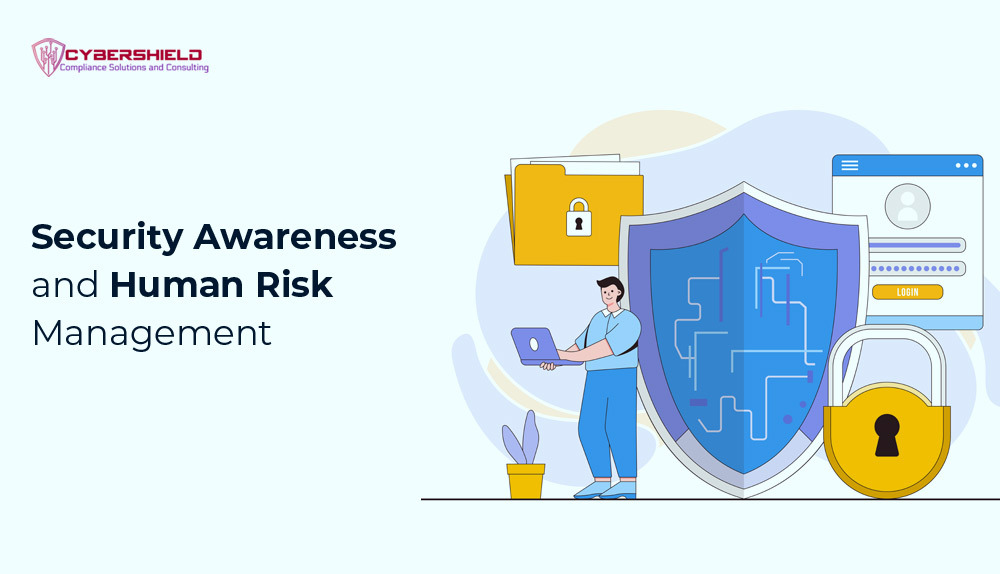
Humans are still involved in 68% of breaches according to Verizon. Annual click-through training is theater. Real human risk management looks different.
It uses continuous phishing simulation calibrated to current attacker techniques, role-based training (your finance team needs different content than your developers), targeted intervention for repeat clickers (the 3% who click everything need coaching, not another module), and culture-level work that makes reporting suspicious activity safe and easy. The goal is to turn your workforce into a sensor network, not a liability.
Leveraging AI and Automation for Proactive Defense
AI cuts both ways. Attackers use it to scale spearphishing, generate malware variants, and clone voices for vishing. Defenders can use it to triage alerts, hunt threats, summarize incidents, and automate response.
The high-value plays for most organizations: automated alert triage in the SOC, AI-assisted threat hunting on telemetry, automated vulnerability prioritization based on exploit intelligence, and SOAR playbooks that handle routine response steps without waiting for a human. Don’t try to AI-everything. Pick the workflows where speed and scale matter most and start there.
Third-Party Risk Management Strategies
If you’re not assessing your vendors’ security, you’re trusting them blindly. The Target, SolarWinds, MOVEit, and Change Healthcare events all had third-party blast radius.
A working third-party risk program inventories all vendors, classifies them by data sensitivity and business criticality, validates security posture (SOC 2, ISO 27001, attestations, real evidence), monitors continuously for breaches and security rating changes, and includes contractual right-to-audit and breach notification clauses in every BAA or DPA. Critical vendors get deeper diligence and ongoing review. The rest get baseline checks.
Continuous Monitoring and Adaptive Security Controls
Annual audits don’t catch attackers who move in days. Continuous monitoring is how you close the gap.
Operationally, this means SIEM or XDR centralizing telemetry from endpoints, identities, network, cloud, and applications, with detections tuned for your environment, not vendor defaults. It also means controls that adapt: conditional access policies that elevate friction when risk signals change, EDR that auto-isolates compromised hosts, and DLP that responds to behavior in real time. The further you can shift from periodic to continuous, the smaller your detection and response windows become.
Measuring Cyber Resilience with Security Metrics
Enterprise security resilience needs measurement, or it isn’t real.
The metrics that matter: mean time to detect, mean time to contain, mean time to recover, percentage of critical assets covered by EDR, percentage of users on phishing-resistant MFA, third-party risk score distribution, time-to-patch on critical vulnerabilities, and tabletop/DR exercise pass rates. Track them. Trend them. Report them quarterly to leadership in business terms. Resilience that can’t be measured can’t be improved or defended in a budget conversation.
Common Gaps in Traditional Cyber Defense Strategies
Across the programs we review, the same gaps show up over and over:
- Reliance on prevention with weak detection and response capability
- Identity controls that haven’t kept pace with cloud reality
- Backups that aren’t immutable or have never actually been restored
- BC/DR plans that exclude cyber events
- Tooling sprawl that creates alert fatigue rather than visibility
- No third-party risk program or only paper attestations
- Security metrics reported as activity (alerts handled) instead of outcomes (time to recover)
If three or more of those describe your program, you have a transformation project, not a tweak.
Steps to Transition from Reactive Security to Cyber Resilience
The shift doesn’t happen in a single quarter. Here’s a realistic sequence:
Phase 1 (Months 1-3): Run a current-state assessment against your chosen framework. Inventory critical assets and third parties. Baseline your detection, response, and recovery times.
Phase 2 (Months 4-6): Close the highest-risk gaps. MFA everywhere. EDR on every endpoint. Immutable backups tested. Incident response plan written and exercised.
Phase 3 (Months 7-12): Stand up continuous monitoring, formal third-party risk management, and the first round of penetration testing. Begin Zero Trust rollout for highest-value applications.
Phase 4 (Year 2 and beyond): Mature toward continuous validation, automated response, integrated BC/DR exercises, and a board-ready cyber resilience metrics dashboard.
Building a Long-Term Cyber Resilience Roadmap
A roadmap isn’t a one-time deliverable. It’s a living document that aligns security investment to business risk and organizational capability.
Good roadmaps share a few traits. They’re framework-aligned (NIST CSF 2.0 functions or equivalent). They’re risk-prioritized rather than tool-driven. They show 12-month, 24-month, and 36-month horizons. They include capability targets (“MTTD under 24 hours by Q2 2027”) not just project lists. And they get reviewed quarterly with executive sponsorship, because conditions change.
Most importantly, they connect security spend to business outcomes. The board should be able to look at the roadmap and answer two questions: are we less exposed than we were last year, and is the investment producing measurable resilience?
How Cybershield CSC Can Help
Cybershield CSC builds cyber resilience programs for businesses that have outgrown the basics. From cyber risk assessment strategy work, framework selection, and threat modeling, through Zero Trust architecture, penetration testing, third-party risk management, and 24×7 managed detection and response, we operate as the security team you’d hire if you could.
Reach out for a 30-minute resilience review. We’ll walk through where your program stands today against modern cyber defense expectations, where the highest-impact gaps are, and what a realistic 90-day starting plan looks like. No pitch, no obligation.