

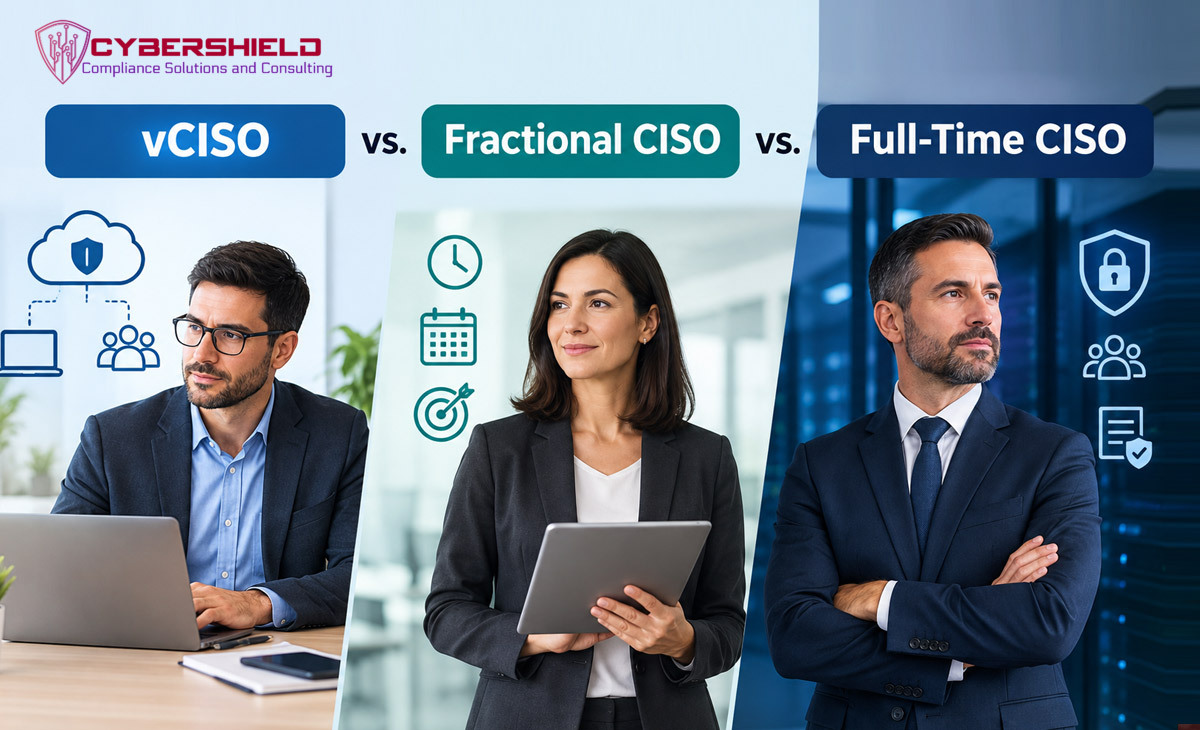
vCISO vs. Fractional CISO vs. Full-Time CISO: What’s the Real Difference?
Key Takeaways
- A vCISO is usually a full team, not a single hired consultant
- Fractional CISOs typically work solo across several clients at once
- A full time CISO works only for your company, with no other clients
- Team based vCISO models respond faster during real incidents
- Company size and regulation should decide, not marketing terms
- Many businesses shift models as their security needs keep growing
A vCISO is usually a team based security service delivered remotely by a firm. A fractional CISO is usually one named security executive splitting their time across a handful of clients. A full time CISO is a dedicated employee who works only for your company. Those definitions sound tidy, but in practice the industry blurs all three, and picking the wrong one can leave your business either overpaying or under protected.
Here is what genuinely separates them, where the labels overlap more than vendors like to admit, and how to figure out which one your company actually needs.
What Is a vCISO?
A vCISO services engagement typically comes from a security firm rather than a single individual. You get a named point of contact, but that person is backed by a bench of specialists (compliance leads, incident responders, risk analysts) who step in as needed. Delivery is almost always remote, scope is usually productized into tiers, and the model was built with small and midsize businesses in mind, since it delivers senior level strategy without requiring a company to build an internal security department from scratch.
This structure matters most when a real incident hits. A solo consultant can get overwhelmed fast during a breach. A firm backed vCISO team can pull in a forensics specialist or a compliance lead on short notice, which is the entire point of buying into a team rather than a single contractor.
Is a Fractional CISO the Same Thing?
Mostly, yes, and this is where a lot of buyers get confused. Industry usage varies, but where a real distinction exists, it usually comes down to structure rather than substance. A fractional CISO is more often a single named operator, frequently someone with prior experience running security at a much larger company, who owns the relationship personally rather than handing pieces of it to a team. Scope tends to be custom built around the client’s stage instead of sold as a fixed package.
The tradeoff runs in both directions. You get deeper personal continuity and someone who has actually sat in the CISO seat before, but less bench strength if that person is unavailable during a crisis or juggling several clients at once. Neither model is objectively better. A three person startup with light compliance needs might be fine with either. A healthcare group juggling HIPAA and multiple state privacy laws usually benefits from the backup a team structure provides, which ties directly into broader cyber compliance obligations that do not pause because your one point of contact is on vacation.
What a Full-Time CISO Actually Brings
A full time CISO is a different animal entirely, and this is the one distinction almost nobody disputes. This person works only for your company, sits in your leadership meetings every week, absorbs your internal politics, and builds institutional knowledge that no outside advisor can match. For a large regulated enterprise with a dedicated security budget and a team to manage, that presence earns its keep.
For most small and midsize companies, though, the math rarely works. A single hire cannot realistically cover strategy, compliance, incident response, vendor management, and board reporting alone, and losing that one person leaves the entire security program without a lead until a replacement is found. That gap is exactly why so many growing companies look at outsourcing cybersecurity leadership rather than betting everything on a single employee.
Which One Actually Fits Your Business?
Company size and regulatory exposure matter more than any label on a contract. An early stage startup with no regulated data and a handful of employees often needs very little formal security leadership yet, so a lighter fractional or vCISO arrangement usually covers it. A company juggling SOC 2, ISO 27001, or industry specific rules, such as a firm handling cybersecurity for law firms style confidentiality obligations, generally benefits from the bench strength a team based vCISO model provides. A large enterprise with hundreds of employees and constant regulatory exposure is usually the point where a full time hire finally makes sense.
If you are still weighing whether any outside option beats building an internal team, our guide on what to expect when outsourcing cybersecurity walks through that decision in more detail. And once you have settled on an outsourced model, our piece on how to choose a vCISO provider covers exactly what to ask before signing anything.
Where CyberShield CSC Fits Into This
CyberShield CSC runs the team based version of this model rather than a solo consultant arrangement. Every engagement comes with a named lead plus access to specialists across compliance, risk assessment, and incident response, so a single person’s availability never becomes a single point of failure for your security program. That structure is also why the firm can support clients across healthcare, finance, and legal work at once, since different specialists inside the team handle the regulatory nuance each industry actually requires.
Picking between these three options comes down to your regulatory exposure, your growth stage, and how much backup you need when something actually goes wrong. If you want help figuring out which model fits your company, talk with our team about what a properly scoped engagement looks like for your business.